When was the last time you thought about the water running through your bathroom faucet or washing machine? Most of us pay attention to drinking water, but everything else tends to escape notice. That changes pretty quickly when strange odors interrupt a relaxing shower or tiny particles start collecting inside freshly cleaned sinks.
For homeowners across Moorhead, Fargo, and neighboring communities, improving the quality of water at every tap can make everyday household activities more comfortable and convenient.
Rather than relying exclusively on kitchen filters, centralized water treatment offers a broader approach. The challenge, of course, is finding equipment that genuinely addresses your water quality concerns without introducing unnecessary expenses or maintenance responsibilities.
Understanding the Water Your Household Depends On
Water characteristics can vary depending on where your supply comes from and what happens before it enters your home.
Municipal water may contain disinfectant residuals, while groundwater supplies can contain naturally occurring minerals, suspended particles, and other substances.
Effective filtration for household water quality begins with understanding these differences and identifying the concerns that actually require treatment.
Perhaps you’ve noticed an unpleasant smell when running the shower. Maybe small particles regularly collect inside faucet aerators.
These observations offer useful clues, but they don’t always reveal what’s responsible.
Water quality reports and appropriate laboratory testing provide more dependable information, helping homeowners choose treatment equipment based on evidence rather than assumptions.
Exploring Different Ways to Filter Your Household Water
There’s no shortage of filtration equipment available, and the choices can become overwhelming rather quickly.
When comparing whole-home filtration options, consider your water source, household consumption, identified contaminants, and available installation space.
Sediment filters capture suspended particles such as sand, silt, and rust. Activated carbon filtration can help reduce chlorine and certain substances associated with unwanted tastes and odors.
Specialized treatment media may be appropriate for more challenging concerns, including excessive iron or manganese.
Some properties benefit from combining several technologies, whereas others require only a relatively straightforward filtration arrangement.
Don’t get too caught up in the number of filtration stages advertised. A simpler system that addresses your actual water problems may offer better value than an elaborate one with unnecessary components.
Why Centralized Treatment Makes Everyday Life Easier
A filter pitcher can certainly improve certain drinking water characteristics, but its usefulness generally ends there.
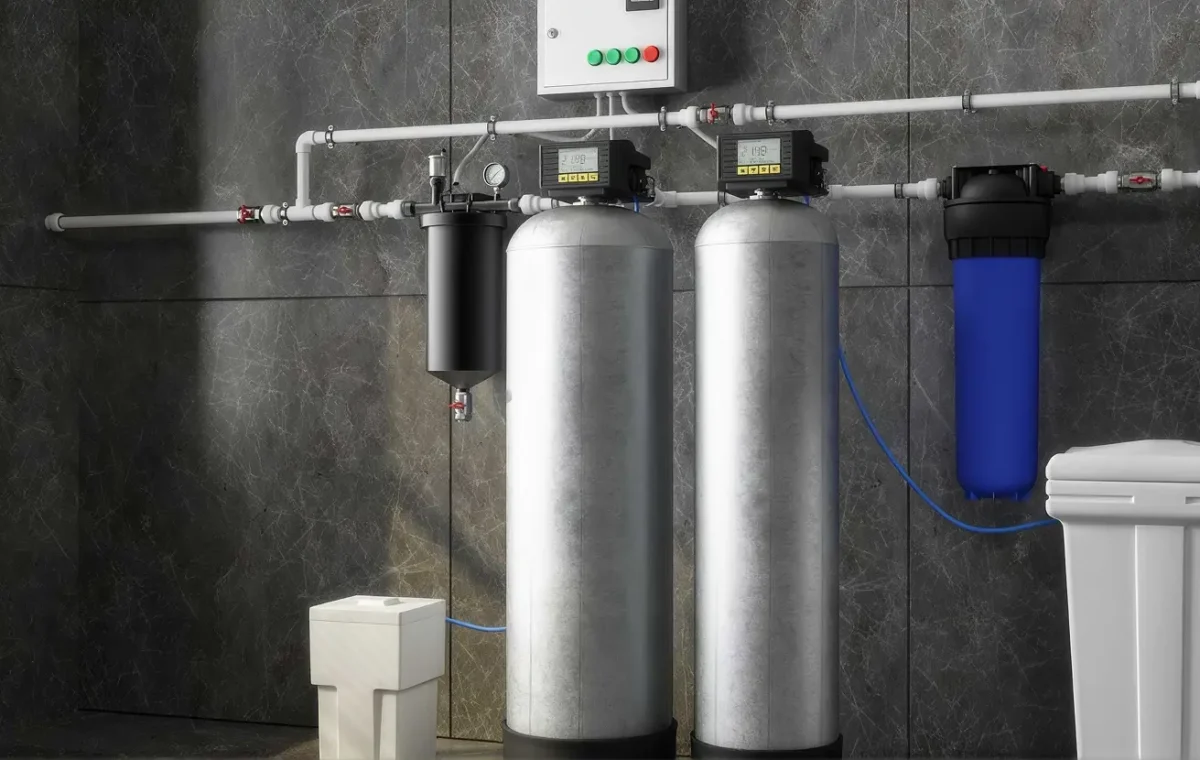
Centralized filtration treats incoming water near the main supply line, allowing appropriately treated water to reach designated fixtures throughout the house.
Think about a typical weekend. You’re washing clothes, preparing meals, cleaning the bathroom, and perhaps running several loads through the dishwasher.
Instead of dealing with separate filtration devices, homeowners can maintain one primary treatment arrangement.
Depending on the equipment installed, centralized filtration may help reduce visible particles and unpleasant odors across several rooms.
It’s a convenience that’s easy to appreciate, especially in a busy household where there’s already plenty to keep track of.
Understanding the Difference Between Filtration and Softening
One common misconception is that installing a household filter will automatically eliminate hard water.
Unfortunately, conventional sediment and carbon filters aren’t designed to remove dissolved calcium and magnesium effectively. Related: Finding the Right Water Solution Starts With Understanding What’s in Your Water
These minerals are primarily responsible for hardness and the chalky deposits that frequently appear around faucets, showerheads, and heated appliances.
If significant hardness is present, an appropriately selected water softener may be necessary.
Filtration and softening can work together, but they perform different jobs.
Similarly, homeowners concerned about specific dissolved drinking water contaminants might benefit from dedicated reverse osmosis equipment.
Understanding these distinctions prevents unnecessary purchases and helps establish realistic expectations about the improvements you can achieve.
Protecting the Appliances You’ve Already Invested In
Replacing a washing machine or dishwasher unexpectedly can put considerable pressure on your household budget.
Suspended particles traveling through the plumbing may accumulate inside appliance screens, valves, and smaller components.
Suitable sediment filtration helps reduce the amount of particulate material reaching these areas. Related: Why the Right Water System Feels Less Like Equipment and More Like a Smart Choice
If hardness is also an issue, appropriate softening can help limit new mineral scale formation.
Neither treatment will automatically restore damaged equipment, but addressing recurring water quality concerns can be a sensible preventive measure.
Considering how much modern household appliances cost, giving the water that flows through them a little extra attention makes practical sense.
Getting the Installation and Maintenance Details Right
Imagine installing a filtration system only to discover that water flow becomes noticeably weaker whenever several faucets operate simultaneously.
Proper equipment sizing helps prevent this kind of frustration.
Before installation, discuss incoming water pressure, peak household demand, plumbing dimensions, and filtration capacity with a qualified professional.
Leave enough space for maintenance, too. Filters shouldn’t be tucked away somewhere that’s difficult to access.
Sediment cartridges need periodic replacement, while activated carbon media eventually reach their treatment capacity.
Centralized carbon filtration can also reduce disinfectant residuals, making proper sanitation particularly important.
Ask about replacement costs and recommended servicing intervals beforehand. Appropriate follow-up testing can help verify continued performance when specific contaminants are being treated.
Making Better Water a Natural Part of Home Life
For homeowners throughout Minnesota and North Dakota, improving household water quality doesn’t need to become an overwhelming project.
Start by understanding your water, select equipment that addresses genuine concerns, and establish a maintenance routine that fits your lifestyle.
The benefits often become noticeable through ordinary experiences — a more enjoyable shower, fewer suspended particles around fixtures, or drinking water with a more pleasant taste.
Better household water isn’t necessarily about purchasing the latest technology. It’s about finding a dependable solution that makes everyday life a little easier.
After all, water supports nearly everything you do at home. Giving its quality some thoughtful attention is an investment in the comfort and convenience your family enjoys every single day.