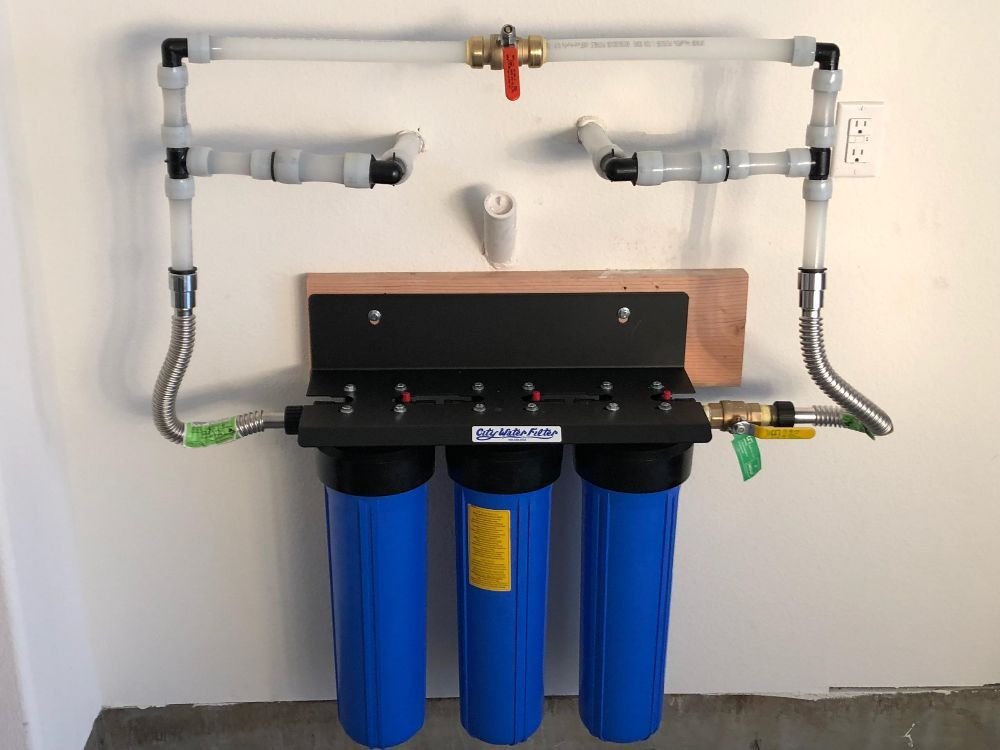
Most of us don’t think about filtration until the water tastes strange, leaves marks on a glass, or starts causing problems with a faucet. Even then, the first instinct is often to buy the biggest system available and hope it solves everything.
But water treatment doesn’t have to be oversized or complicated. Sometimes, a small system installed exactly where water is needed can be the smarter choice.
Point-of-use filtration focuses on specific taps or appliances rather than treating every drop entering the property. For many households, that approach can offer a practical balance between water quality, convenience, installation, and ongoing cost.
The trick is understanding what the water needs before choosing the equipment.
Start With the Water, Not the Equipment
Every property has its own water story.
Municipal supplies, private wells, older plumbing, and local geology can all influence water quality. Some homes deal with sediment. Others have chlorine taste, hard water, or concerns about specific dissolved substances.
Testing is a sensible first step because clear water isn’t necessarily problem-free. A laboratory or professional water analysis can reveal characteristics that aren’t visible to the eye.
For example, sediments such as sand, dirt, rust, and other suspended particles can enter water through wells or plumbing systems. A sediment filter can often address this type of issue, but it won’t necessarily solve problems involving dissolved contaminants.
That’s why choosing a filter based on the actual water conditions is more useful than buying one simply because it has good reviews.
What Is Point-of-Use Filtration?
Point-of-use filtration treats water at or near the location where it’s consumed.
An under-sink system is a common example. Instead of filtering every gallon used for showers, toilets, laundry, and outdoor watering, it focuses on water coming from a particular kitchen faucet.
This can be a smart option when drinking and cooking water are the main priorities.
There are also countertop filters, faucet-mounted systems, refrigerator filters, and specialized systems designed for individual appliances. Related: The Quiet Upgrade That Changes Everything: Making Your Home’s Water Feel Right Again
The approach is fairly simple: treat the water where it matters most.
Why Smaller Systems Can Make Sense
A compact filtration system can be easier to install and maintain than a large whole-home setup.
If your main concern is the taste or odor of drinking water, you may not need filtered water coming from every faucet in the house. Treating the kitchen supply can provide what you actually need without adding unnecessary equipment to the plumbing network.
Compact systems can also be useful in apartments, smaller homes, rental properties, and kitchens where utility-room space is limited.
That doesn’t mean smaller is always better. If your water has a property-wide problem, such as significant hardness or widespread sediment, whole-home treatment may make more sense.
Again, it comes down to matching the system to the problem.
Different Filters Do Different Jobs
Not all filters work in the same way.
Activated carbon is commonly used to reduce chlorine and improve taste and odor. Sediment filters capture suspended particles. Reverse osmosis systems can reduce many dissolved substances through membrane filtration.
Some systems combine several stages, giving each filter a specific role.
This is where product labels can get confusing. A filter advertised as “multi-purpose” isn’t necessarily designed to address every possible contaminant.
Look for specific performance information. If you’re concerned about lead, for example, choose equipment certified for lead reduction. If hardness is the issue, a water softener—not an ordinary drinking-water filter—is generally the more appropriate technology.
Efficiency Matters More Than Features
People often compare filtration systems by counting stages, features, or buttons. Those things can be interesting, but they’re not always the most important measures.
A system should be efficient in the ways that matter to you.
That might mean using less water, requiring fewer filter changes, producing enough treated water for your household, or operating without unnecessary complexity.
Reverse osmosis is a good example. It can provide extensive filtration, but traditional systems may send some water down the drain during operation. Newer designs can improve water efficiency, so it’s worth comparing specifications instead of assuming all RO systems operate identically.
Where Point-of-Use Systems Work Best
There are plenty of situations where point-of-use applications make practical sense.
A kitchen drinking-water faucet is probably the most obvious. But you might also consider targeted filtration for a refrigerator water dispenser, coffee station, or another location where water quality matters more than throughout the entire property.
For people who rent their homes, point-of-use equipment can also be appealing because it may require less modification to the plumbing.
Of course, installation requirements vary. Some systems can be connected relatively simply, while others should be installed by a qualified professional. Related: A Gentler Kind of Clean: Understanding Peroxide-Based Water Treatment for Everyday Homes
Maintenance Is the Part People Forget
Here’s the unglamorous truth about water filters: they don’t last forever.
Every filter has a service life. Once it becomes saturated or clogged, performance can decline. Water flow may slow down, or taste and odor may begin to change.
Set a calendar reminder for filter replacement. It sounds almost too simple, but it works.
If your system includes multiple cartridges, replace each one according to the manufacturer’s recommendations. Don’t assume that because water still looks clear, the filter is still performing at its best.
Regular maintenance is what turns a good filtration system into a dependable one.
When Point-of-Use Isn’t Enough
There are times when treating only one faucet doesn’t make sense.
If your entire home has severe hard-water problems, a whole-home softener may be more appropriate. If sediment is entering multiple fixtures, property-wide filtration could be worth considering.
Likewise, if your water test identifies a concern that affects all household water, limiting treatment to the kitchen may leave the rest of the plumbing exposed.
The best solution depends on the scope of the problem.
A Practical Approach to Better Water
Point-of-use filtration isn’t about buying the smallest system possible. It’s about being thoughtful about where treatment is actually needed.
Start with testing. Identify the water-quality concern. Consider how much treated water your household really uses, then compare filtration technologies based on their documented capabilities, maintenance requirements, and long-term costs.
For some homes, an under-sink system will be more than enough. Others need something broader.
There’s no shame in keeping things simple when simple works.
A well-chosen point-of-use filter can quietly improve the water you drink every day without turning your home into a maze of pipes and equipment. Sometimes the smartest solution isn’t the biggest one—it’s the one that fits your life, does its job properly, and stays easy to maintain.