Water is one of those everyday necessities that doesn’t usually get much attention. We turn on the faucet, fill a glass, wash vegetables, take a shower, and carry on with the day. It works quietly in the background.
But sometimes, water gives you a reason to pay attention.
Maybe there’s a noticeable smell. Perhaps your drinking water tastes different from what you’re used to. You may see sediment in a glass or mineral marks around faucets. Or maybe you’re simply looking for a practical way to improve the water your family uses.
That’s when filtration becomes worth exploring. The key, though, is not buying the first filter that looks promising. It’s understanding what your water needs and choosing a system that matches the problem.
What Water Filtration Actually Does
At its simplest, water filtration is the process of passing water through a material or technology designed to reduce specific unwanted particles or substances.
But filters aren’t all the same.
Some are designed to catch sediment. Others use activated carbon to improve taste and odor or reduce certain substances. More advanced systems may combine several stages for broader treatment.
This is why the phrase “water filter” doesn’t tell you very much by itself. You need to know what the filter is designed to remove and whether that matches your water conditions.
Start by Testing Your Water
Before choosing equipment, consider finding out what’s actually in your water.
Testing can reveal characteristics such as hardness, mineral content, chlorine, iron, sediment, or other concerns depending on the type of test performed.
This step may sound unnecessary if your water looks perfectly clear. But appearance doesn’t tell the whole story.
A glass of clear water can still contain dissolved substances that affect taste, odor, or household use.
Knowing what you’re dealing with helps you avoid spending money on equipment that solves the wrong problem.
Whole-House Filtration Has a Bigger Job
A small filter at the kitchen sink can be useful, especially if your main concern is drinking and cooking water. But it doesn’t treat the water flowing through the rest of your home.
That’s where whole house filtration comes into the picture.
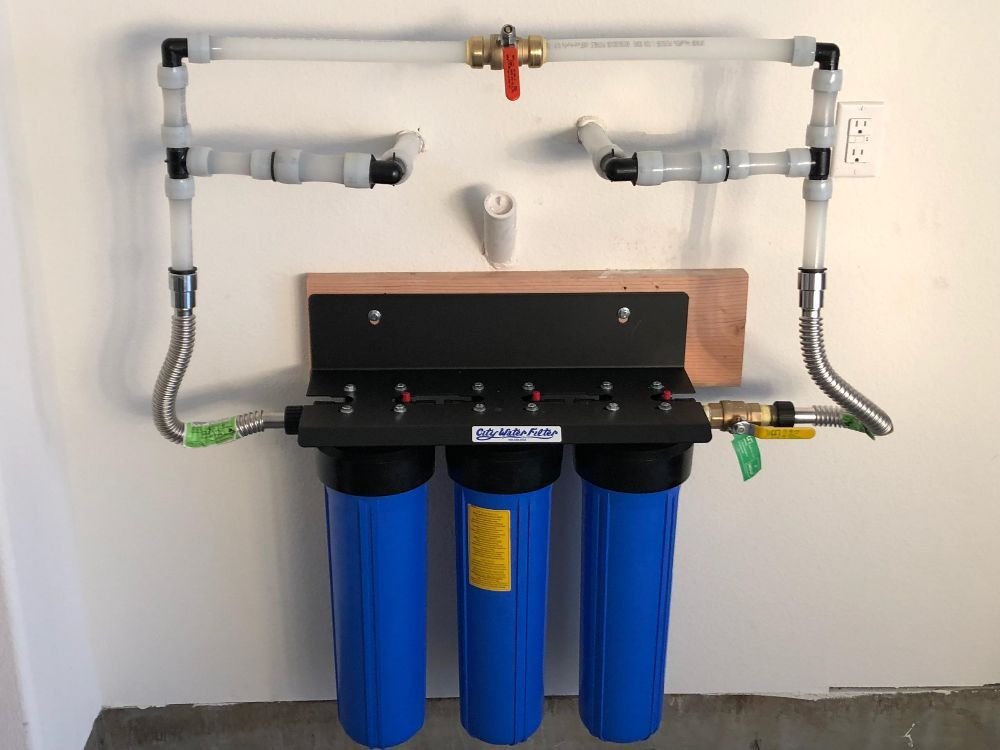
A whole-house system is installed at or near the point where water enters the property, allowing treated water to flow through multiple fixtures.
That can be useful if you have concerns that affect showers, bathroom faucets, laundry, or other areas—not just the kitchen. Related: Why Better Water Filtration Starts With Knowing What’s in Your Water
However, whole-house treatment isn’t automatically necessary for everyone. If your only concern is improving the taste of drinking water, a smaller point-of-use system might be more practical.
Different Filters Handle Different Problems
One of the most important things to understand is that filtration isn’t a universal solution.
Sediment filters can help capture particles. Carbon filters are often used for taste and odor improvement. Specialized systems may target particular substances.
Hard water is another example. If calcium and magnesium are causing scale, a traditional water softener may be more appropriate than a basic filter.
In other words, don’t ask only, “Which filter is best?”
Ask, “Which filter is best for my water?”
That small change in thinking can make the buying process much easier.
When Water Filter Systems Make Sense
Modern water filter systems come in many sizes and configurations.
Some are simple countertop units. Others fit under the sink. Whole-house systems are larger and designed for broader household use.
The right choice depends on your water source, household size, daily consumption, available space, and treatment goals.
If you’re renting a home, a portable or under-sink solution may be more practical. If you own a property and have a persistent water issue throughout the house, a whole-home approach could make more sense.
There’s no prize for choosing the biggest system.
Don’t Ignore Your Appliances
Water quality affects more than what comes out of your drinking faucet.
Dishwashers, washing machines, water heaters, coffee makers, and other appliances all interact with household water.
Sediment can cause problems in certain systems, while hard water may leave mineral deposits. If you keep cleaning scale from your appliances and it returns quickly, the water itself could be part of the problem.
Filtration may help with some concerns, but remember that different issues require different treatment methods.
A filter isn’t a substitute for a softener when hardness is the primary concern. Related: Finding the Right Water Solution Starts With Understanding What’s in Your Water
Maintenance Keeps Filtration Effective
Installing a filter is only the beginning.
Every filtration system has maintenance requirements. Cartridges need replacing, membranes have service intervals, and housings may need cleaning depending on the system.
Ignoring replacement schedules can reduce performance.
It’s surprisingly easy to forget, especially when the equipment is tucked away under a sink. A calendar reminder is a simple solution.
Keep track of when filters are changed, and follow the manufacturer’s instructions rather than waiting for the water to taste strange.
Look Beyond the Purchase Price
When comparing filtration systems, the initial price is only one part of the picture.
Consider replacement filter costs, installation, maintenance, water usage, and expected equipment life.
A cheaper system may seem attractive initially but cost more over several years if replacement cartridges are expensive or need frequent changing.
At the same time, an expensive system isn’t automatically better.
Look for a balance between performance, reliability, maintenance, and what your household actually needs. Related: Why the Right Water System Feels Less Like Equipment and More Like a Smart Choice
Better Water Starts With the Right Match
Good water filtration isn’t about making your home more complicated. It’s about solving a real problem in a sensible way.
Start by understanding your water. Test it when appropriate. Decide whether your concern is limited to drinking water or affects the entire property.
Then choose technology designed for that specific purpose.
For some homes, a simple filter is enough. Others may benefit from a whole-house system or a combination of treatment methods.
The goal isn’t to have the most equipment. It’s to have the right equipment.
When you find that balance, better water becomes something you barely have to think about—and honestly, that’s probably the best result of all.