Most businesses don’t think about water until something goes wrong. It’s just there — flowing through pipes, supporting operations quietly in the background. Coffee shops brew with it, hotels rely on it, manufacturing lines depend on it. It’s part of everything, yet rarely part of the conversation.
Until it starts affecting results.
A strange taste in drinks. Equipment that needs repairs more often than expected. Customers noticing things you wish they wouldn’t. That’s when water shifts from being invisible to being… unavoidable.
And once that shift happens, you realize it’s not just a maintenance issue. It’s a business decision.
The Cost of Overlooking What’s Always Running
Water touches more parts of a business than most people realize. It’s not just about consumption — it’s about performance.
Take a small café, for instance. If the water isn’t right, the coffee won’t be either. No matter how premium the beans are. Or think about a commercial laundry service — poor water quality can lead to dull fabrics, higher detergent use, and inconsistent results.
Even in industries you wouldn’t expect, water plays a role. Cooling systems, cleaning processes, food preparation, guest experience — it’s everywhere.
That’s why businesses eventually start looking into commercial water solutions. Not because it’s trendy, but because they can’t afford to ignore it anymore. When water quality affects output, efficiency, and customer satisfaction, it becomes part of the core operation.
When Consistency Matters More Than Anything
In business, consistency is everything.
Customers expect the same quality every time — the same taste, the same experience, the same standard. But inconsistent water can quietly disrupt that.
One day, everything runs smoothly. The next, there’s a slight variation. Not enough to cause alarm, but enough to be noticed. And those small inconsistencies can chip away at trust over time.
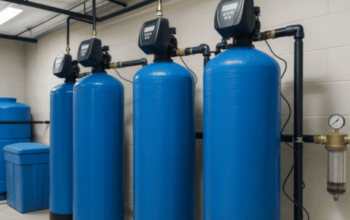
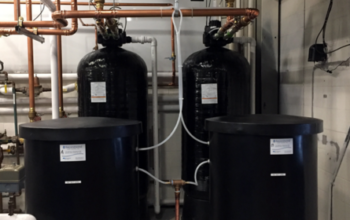
This is where business water filtration systems come into play. They don’t just clean water — they stabilize it. They create a reliable baseline so that everything built on top of it remains consistent.
Because in business, unpredictability is expensive.
The Hidden Impact on Equipment and Operations
Beyond customer experience, there’s another layer to consider — the machinery itself.
Water with high mineral content can lead to scaling inside equipment. Pipes narrow, heating elements lose efficiency, and components wear out faster than they should. It doesn’t happen overnight, which makes it easy to overlook.
But over time, the costs add up. Maintenance becomes more frequent. Downtime increases. Repairs become part of the routine instead of the exception.
That’s why many businesses focus on equipment uptime support as part of their water strategy. It’s not just about fixing problems when they occur — it’s about preventing them from happening in the first place.
Because every minute a machine isn’t running, something else is being affected — productivity, revenue, customer satisfaction.
A Shift from Reactive to Proactive Thinking
One of the biggest changes businesses make is moving from reactive solutions to proactive planning.
Instead of waiting for a complaint or a breakdown, they start asking questions early. What’s in our water? How is it affecting our processes? What can we improve before it becomes a problem?
This shift isn’t always immediate. It usually comes after a few frustrating experiences — a costly repair, a batch of inconsistent products, a customer comment that sticks a little longer than expected.
But once that mindset changes, so does everything else.
Water becomes something you manage, not something you assume.
Tailoring Solutions to Fit the Operation
No two businesses are the same, and neither are their water needs.
A restaurant has different requirements than a manufacturing plant. A hotel’s priorities differ from a healthcare facility. Even within the same industry, variations in equipment, usage, and location can change what’s needed.
That’s why a one-size-fits-all approach rarely works.
Instead, effective water management involves understanding the specific demands of your operation. What are you using water for? Where are the pain points? What outcomes matter most?
Once those questions are answered, the right solution becomes clearer. Not generic, but tailored — designed to support the way your business actually runs.
The Quiet Benefits That Add Up Over Time
What’s interesting is that the benefits of improved water quality aren’t always immediately visible.
Yes, there are noticeable improvements — better product consistency, fewer maintenance issues, smoother operations. But there’s also a quieter side.
Reduced energy consumption as equipment runs more efficiently. Lower costs on cleaning agents and detergents. Longer lifespan for machines and infrastructure.
These aren’t headline-grabbing changes, but they matter. Especially over time.
And perhaps most importantly, they reduce stress. Fewer surprises. Fewer disruptions. A smoother day-to-day experience for everyone involved.
Water as Part of the Bigger Picture
At some point, water stops being an isolated concern and becomes part of a larger strategy.
It connects to quality control, operational efficiency, cost management, and even brand reputation. It’s not just about what’s coming out of the tap — it’s about how that water supports everything else.
And when it’s managed well, it fades into the background, doing its job without drawing attention.
Which, in many ways, is exactly what you want.
Bringing It All Together
Businesses often focus on the big decisions — investments, expansions, marketing strategies. But sometimes, the smaller, less obvious factors have just as much impact.
Water is one of those factors.
It doesn’t demand attention, but it influences everything. And when it’s not right, the effects ripple through your entire operation.
Taking the time to understand it, improve it, and manage it properly isn’t just a technical upgrade. It’s a business decision — one that supports consistency, efficiency, and long-term success.
Because in the end, it’s not just about water.
It’s about everything that depends on it.