
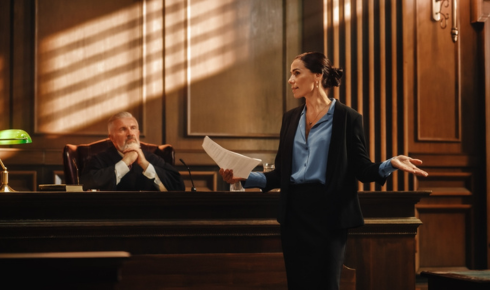
There’s something undeniably powerful about last words. Whether it’s the final line of a book, the last scene in a movie, or those crucial moments before a courtroom trial comes to a close—how we end things lingers.
In the legal world, that final note? It’s called the closing statement. And believe me, it’s not just another formality—it’s where the magic, or the mayhem, often happens.
The Essence of a Closing Statement
Before we dig into tips and strategy, let’s start from the basics. What is a closing statement, really? Well, in its simplest form, it’s the part of the trial where attorneys sum up everything for the jury. It’s their chance to tie the story together, reinforce key evidence, and leave jurors with one last emotional and intellectual nudge before deliberations begin.
But here’s where it gets interesting. While opening statements are more reserved—“Here’s what we plan to prove”—closings are where lawyers can finally say, “Here’s what we did prove.”
And that shift? That’s huge.
More Than Just a Recap
Many people assume closing statements are just courtroom summaries. But that couldn’t be further from the truth. If you’ve ever watched a really skilled litigator deliver one live, you know they’re anything but dry. They’re theatrical without being over-the-top. Strategic without sounding calculated. Honest, but persuasive.
The truth is, the closing argument is the last real moment to sway a jury. And in close cases, it can tip the scales.
The Defense Has the Last Dance
There’s something kind of poetic about the defense going last. Sure, the prosecution or plaintiff speaks first in closing—but the defense gets the final word. And that’s not by accident. It’s designed that way to balance the scales, giving the accused the last chance to respond.
Defense closing arguments require a particular finesse. Unlike the prosecution, which has the burden of proof, the defense’s job is to poke holes, raise doubts, and reframe the entire narrative.
It’s a delicate balance—acknowledging what happened without fully conceding, pointing out inconsistencies without sounding dismissive, and still managing to sound sincere.
It’s About Framing, Not Just Facts
Here’s something you might not expect: the most effective closings aren’t always the ones that rattle off every fact from the trial. Nope. The best ones frame the entire case in a way the jury wants to believe.
Let me explain.
Facts matter—of course. But facts alone don’t win cases. It’s how those facts are told, how they’re stitched into a story, that makes the difference. A compelling narrative can give jurors the roadmap they need to feel confident in their decision.
That’s why, more often than not, the closing statement by defense includes analogies, vivid language, and emotional appeals. It’s not manipulation; it’s connection. It’s helping 12 strangers understand what’s really at stake.
The Human Element: Making It Personal
Let’s get real for a second—jurors are just people. People who have jobs, families, and lives outside of that courtroom. They don’t speak “legalese,” and they definitely don’t appreciate being lectured.
So if you’re writing or delivering a closing, ditch the robotic tone. Talk like a person. Tell a story. Ask rhetorical questions. Use examples. Walk the jury through what you would think if you were in their shoes.
This kind of relatability? It’s powerful. And it often makes the difference between a verdict that favors your client—and one that doesn’t.
Common Pitfalls (And How to Dodge Them)
Even experienced attorneys fall into a few traps during closings. Here’s what to watch for:
- Overloading with facts – Don’t rehash everything. Focus on what matters.
- Being too emotional – Passion is good, but desperation? Not so much.
- Neglecting the jury’s perspective – Think like them. Speak to their level.
- Ignoring weaknesses – Address flaws in your case head-on. It builds trust.
You’re not just proving a point—you’re earning credibility. And that’s gold in a courtroom.
Delivering the Goods: Tips That Stick
Alright, so how do you build a killer closing?
Start with a theme. Maybe it’s “This is a case about responsibility.” Or “This is a case about doubt.” Hammer that theme throughout. Then organize your points with that theme in mind.
Here’s a bonus tip: end with your strongest note. Not your second-best, not your “meh” observation—your best, most persuasive, most emotional point.
Because when the jury walks into deliberation, that last sentence might be the one thing they remember most.
Not Just for Lawyers
If you’re thinking, “Well, this is great, but I’m not a lawyer,” — you’d be surprised how this stuff applies elsewhere.
Business pitches. Speeches. Negotiations. Closing arguments aren’t just legal tools; they’re persuasion tools. Learning how to make a strong, structured closing statement can help in just about any setting where you want to leave a lasting impression.
So whether you’re trying to convince a client, motivate a team, or win over a boardroom—channel your inner litigator. Wrap it all up with confidence, clarity, and purpose.
The Weight of Final Words
Here’s what it all comes down to: the end matters.
Whether it’s a six-week murder trial or a five-minute client meeting, your closing statement is your opportunity to shape how your audience feels when everything’s said and done.
And that feeling? It sticks. It lingers. It helps them decide.
So make your words count. Not by being perfect. But by being real. Grounded. Focused. Human.
Final Thoughts
Crafting a memorable closing statement isn’t about flair or theatrics—it’s about impact. It’s about taking everything that happened, every word spoken, every piece of evidence offered, and making it mean something.